
Table of Contents
- What Small-Batch Coffee Roasting Actually Means
- How Small-Batch Roasting Differs from Commercial Production
- Small-Batch Coffee Roasting: Greater Control Over Temperature and Timing
- Flavor Development and Tasting Notes in Freshly Roasted Coffee Beans
- Understanding Coffee Roast Date and Freshness After Roasting
- How to Store Coffee Beans for Maximum Freshness
- Small-Batch Coffee Worth the Price: Quality Over Quantity
- Frequently Asked Questions
Last Updated: October 16, 2026
What Small-Batch Coffee Roasting Actually Means
Small-batch coffee roasting refers to the practice of roasting coffee beans in deliberately limited quantities, typically ranging from a few pounds to a few dozen pounds per roast cycle. This approach prioritizes precision and freshness over volume, allowing roasters to focus on quality rather than scaling production to meet mass-market demand.
At Deep Blue Coffee Roasters, we define small-batch roasting as roasting coffee in controlled quantities that allow us to monitor every stage of the process closely. When you roast smaller batches, each bean receives consistent attention. The roaster can adjust heat, airflow, and timing in real time based on how the beans respond.
This contrasts sharply with commercial roasting operations, which process hundreds of pounds at once. In those settings, the goal is consistency across massive volume. Individual bean characteristics get smoothed out in favor of a standardized profile that works for the broadest possible audience.
Small-batch roasting isn't new, but it has become central to the specialty coffee movement. Coffee enthusiasts and café operators have discovered that roasting smaller quantities unlocks flavors that large-scale operations simply cannot achieve. The difference isn't subtle, it's measurable in the cup.
How Small-Batch Roasting Differs from Commercial Production
The differences between small-batch and commercial roasting run deeper than batch size alone. They affect equipment, workflow, decision-making, and ultimately, what ends up in your cup.
Commercial roasting operations use large drum roasters designed to process hundreds of pounds per cycle. These machines prioritize throughput. A roaster operator monitors temperature and timing, but the sheer volume means individual variation gets absorbed into the larger batch. If one section of beans roasts slightly differently, it blends into the whole.
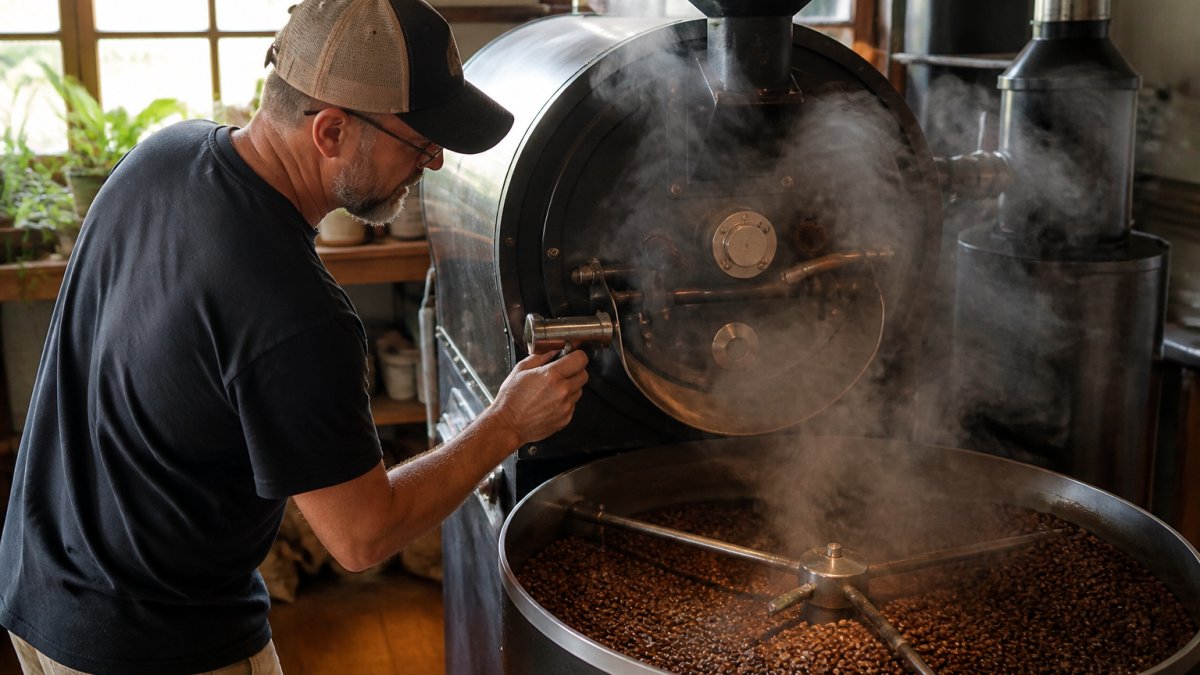
Small-batch roasting uses smaller equipment, often 5 to 25-pound capacity drums or fluid bed roasters. This smaller scale means the roaster can see and respond to what's happening with the beans in real time. Temperature fluctuations become visible. Color development can be tracked bean by bean, not averaged across hundreds of pounds.
The workflow differs too. Commercial operations run roasts back-to-back, sometimes all day. Small-batch roasters space out their cycles. There's time between roasts to cool equipment, assess results, and adjust the next profile. This rhythm allows for learning and refinement.
Here's where it gets practical: commercial roasting aims for consistency across millions of pounds shipped to thousands of locations. Variation is the enemy. Small-batch roasting embraces variation as information.
Small-Batch Coffee Roasting: Greater Control Over Temperature and Timing
This is where the real advantage of small-batch coffee roasting emerges. Temperature and timing are the two levers that determine how coffee develops during the roast. Control over both is what separates exceptional coffee from average.
In small-batch roasting, the roaster has precise control over heat input at every moment. A typical roast lasts 8 to 15 minutes. During that window, the roaster adjusts the burner flame or heating elements continuously.
Temperature precision matters because coffee development happens in narrow windows. First crack, the audible popping sound beans make as they expand, occurs around 350 to 380 degrees Fahrenheit, depending on the bean. Second crack happens around 420 degrees. The span between them is where most specialty coffee lives.
Airflow adds another layer of control. Airflow moves heat through the beans and carries away chaff (the papery skin that comes off during roasting). Too little airflow and hot spots develop. Too much airflow and the roast accelerates unevenly. Small-batch roasters adjust airflow continuously throughout the roast.
Commercial roasters have temperature and airflow controls too, but they're optimized for speed and consistency at scale. A commercial roaster might hit the same temperature curve for every batch because that curve works reliably for large volumes.
The practical result: small-batch coffee reflects the roaster's intention. You taste the decisions made during those 8 to 15 minutes. Commercial coffee tastes like the machine's standard setting.
Flavor Development and Tasting Notes in Freshly Roasted Coffee Beans
The roast profile, the specific path of temperature and timing a roaster takes, directly shapes what flavors emerge in the final cup. This is where small-batch roasting's precision advantage becomes obvious to anyone who tastes the coffee.
Coffee beans contain hundreds of flavor compounds. Green (unroasted) coffee tastes grassy and flat. Heat triggers chemical reactions that develop these compounds into the flavors we recognize: sweetness, acidity, body, and complexity.
Light roasts emphasize the bean's origin characteristics. A light roast of Kenya coffee might highlight bright citrus and floral notes because the roaster stopped early, before those delicate compounds got burned away. A light roast of Guatemala coffee brings out different notes, perhaps cream and chocolate, based on the bean's unique chemistry.
Medium roasts balance origin flavor with roast flavor. The roaster lets more development happen, so caramel and brown sugar notes emerge alongside the bean's natural character.
Dark roasts emphasize roast flavor over origin. The longer heat exposure creates bold, smoky, or chocolatey notes that dominate the cup.
Here's what most people miss: the same bean roasted to light, medium, and dark levels will taste like three different coffees. A skilled small-batch roaster chooses the roast level that brings out the best in that specific bean. A commercial roaster chooses the roast level that works for the widest market.
At Deep Blue Coffee Roasters, we roast small batches specifically so we can match roast level to bean. Our Kenya Limited Fall Addition is a vibrant, fruit-forward Kenyan cup that holds its character through a darker roast, with bright peach and apricot notes, a delicate black tea structure, crisp green apple acidity, and honeyed sweetness for a balanced, medium body.

When you buy small-batch coffee, you're buying the roaster's judgment about what that bean deserves.
Understanding Coffee Roast Date and Freshness After Roasting
The roast date is the single most important number on a coffee bag. It tells you how fresh the coffee is and how much of its complexity remains.
Coffee is freshest 3 to 7 days after roasting. During this window, CO2 gas continues to release from the beans, and the flavors are at their peak. The coffee tastes vibrant and complex.
From day 7 to day 21, the coffee is still good, but it begins to flatten. The brightness fades. The acidity softens. The aroma diminishes. By week three, most specialty coffee has lost noticeable complexity.
After day 30, the coffee enters what we call "aged territory." It's not bad. It's just less interesting. The flavors have become muted. The body feels thinner. If you're used to drinking fresh coffee, aged coffee will feel disappointingly flat.
Commercial coffee doesn't list a roast date. It's roasted weeks before you buy it. By the time it reaches your kitchen, it's already lost its peak freshness. This is why mass-market coffee tastes flat, you're drinking coffee that's already past its prime.
Small-batch roasters ship quickly because they understand freshness. Deep Blue Coffee Roasters roasts to order and ships within days. You get coffee at its best.
The practical implication: check the roast date before you buy. If it's not printed on the bag, ask. If the roaster won't tell you, the coffee is probably too old to be worth buying.
How to Store Coffee Beans for Maximum Freshness
Once you have fresh small-batch coffee, storage becomes critical. Poor storage accelerates the loss of flavor and aroma.
Coffee's enemies are:
- Air (oxygen degrades the beans)
- Light (UV light accelerates staling)
- Heat (warmth speeds up chemical breakdown)
- Moisture (water causes beans to swell and lose oils)
The best storage method is simple: keep beans in an airtight container in a cool, dark place. A sealed bag with a one-way valve works well. So does an airtight glass jar kept in a cabinet away from sunlight.
Temperature matters more than most people realize. Room temperature (around 70 degrees Fahrenheit) is fine. A refrigerator is fine too, as long as the beans stay dry.
Never store coffee in the refrigerator door. Every time you open and close the door, temperature fluctuates. The beans expand and contract, which damages them.
Grinding exposes far more surface area to air and light. Whole beans stay fresh longer than ground coffee. If you grind your beans, grind just before brewing. Ground coffee begins losing aroma within 15 minutes of grinding.
Here's the mistake people make: they buy a beautiful bag of fresh small-batch coffee and store it on the counter next to the stove. Heat and light destroy it within days. Then they blame the roaster.
Store beans properly, and they'll stay complex and flavorful for three weeks. Store them poorly, and even the best small-batch coffee will taste stale within a week.
Small-Batch Coffee Worth the Price: Quality Over Quantity
Small-batch coffee costs more per pound than commercial coffee. This is a real difference, and it deserves a straight answer: yes, it's worth it, but only if you understand what you're paying for.
A typical commercial coffee costs between $8 and $12 per pound. Small-batch specialty coffee often costs $18 to $28 per pound. That's a significant premium.
What you're paying for:
Sourcing. Small-batch roasters buy directly from farmers or through specialty importers. They pay more per pound because they're buying smaller quantities and demanding higher quality. Commercial roasters buy commodity coffee, which is cheaper but less distinctive.
Roasting attention. Small-batch roasting requires skill and time. The roaster is actively managing the roast, not just running a machine. This labor-intensive approach costs more than running large batches on autopilot.
Freshness. Small-batch roasters ship quickly. You pay for coffee that's still at its best, not coffee that's been sitting in a warehouse for months.
Consistency of flavor. Because each roast gets careful attention, the coffee tastes the same from bag to bag. You know what you're getting.
Deep Blue Coffee Roasters offers a way to make small-batch coffee more affordable: the monthly subscription. Subscribe, and you save $1 per bag. Buy three or more bags at once, and you save $1 per bag.
Is that worth it? Consider this: one bag of small-batch coffee makes about 30 cups. That's less than $1 per cup for coffee that tastes noticeably better than commercial alternatives.
The real question isn't whether small-batch coffee is worth the price. It's whether you care enough about flavor to pay for it.
Small-batch coffee delivers something mass-market coffee cannot: consistency, freshness, and flavor complexity that reflects the roaster's skill. Start with our Guatemala Coffee Light-Medium Roast or our Indonesia Sumatra Dark Roast, both available with a $1 subscription discount.

Frequently Asked Questions
Why does small-batch coffee taste better than mass-produced coffee?
Small-batch roasting allows roasters to control temperature, airflow, and roast time precisely for each batch. This precision brings out a coffee's distinctive tasting notes, citrus, chocolate, floral notes, that mass production flattens. Smaller batches also stay fresher longer because they're roasted more frequently and shipped sooner, preserving aroma and vibrant flavors that fade in older beans.
How long does freshly roasted coffee stay fresh after the roast date?
Freshly roasted coffee beans remain excellent if stored properly in an airtight container away from light, heat, and moisture. After a few weeks, flavor fades noticeably. Check the roast date on your bag.
What's the best way to store coffee beans to keep them fresh longer?
Store beans in an airtight container in a cool, dark place, a pantry or cupboard works well. Keep them away from direct sunlight, heat sources, and strong-smelling foods. Whole beans stay fresher longer than ground coffee, so grind only what you'll use within days.
How can you tell if coffee beans are actually fresh?
Check the roast date on the package, freshly roasted beans should be roasted within 1-2 weeks of purchase. When brewed, fresh beans produce richer aroma, vibrant flavors, and a full body. If your coffee tastes stale or weak, the beans have likely aged past their prime.