
Table of Contents
- Why Organic Coffee Beans Are Worth the Switch
- Organic vs. Conventional Coffee: What Actually Changes in the Cup
- Pesticides in Coffee: What the Research Shows
- What USDA Organic Coffee Certification Does and Does Not Guarantee
- How to Choose Organic Coffee Beans: A Practical Buying Checklist
- Environmental Impact: Soil Health, Bird Habitat, and Biodiversity
- Frequently Asked Questions
Last Updated: October 12, 2026
Why Organic Coffee Beans Are Worth the Switch
The benefits of buying organic coffee beans start with one uncomfortable fact: your daily cup may carry residues of the synthetic chemicals used to grow it. Organic coffee is coffee grown without synthetic pesticides, herbicides, or fertilizers, and certified under a USDA program that verifies those growing conditions. At Deep Blue Coffee Roasters, we roast organic lots in small batches, so we see firsthand how growing practices shape what lands in the cup. Below, we break down what actually changes when you switch, where organic delivers real value, and where the marketing outruns the evidence.
Organic coffee is coffee cultivated without synthetic pesticides, herbicides, or fertilizers and certified by a USDA-accredited agent. That definition matters because it sets the boundary between a verified claim and a feel-good label.
Organic vs. Conventional Coffee: What Actually Changes in the Cup
The biggest difference between organic and conventional coffee is how the crop is grown, not how it tastes by default. Conventional coffee farming often relies on synthetic inputs to control pests and boost yield, while organic farming replaces those with composting, shade management, and biological pest control. Coffee plants themselves are the same species either way.
Flavor, Freshness, and Roast Date
Growing method influences flavor indirectly, through soil and ripeness. A coffee's taste comes mostly from origin, processing, and roast level. What separates a memorable cup from a flat one is freshness, and that means the roast date on the bag, not the word "organic" on the front. We roast in small batches and ship soon after, because a light roast like our Ethiopia USDA Organic lot shows its apricot, lime, and black tea notes only when it hasn't sat in a warehouse for months.

Price and Value: What You Pay For
Organic beans usually cost more because organic farming yields less per acre and certification adds cost. You are paying for verified growing conditions, not a flavor guarantee. The value question comes down to what else you get: freshness, traceability, and a roast date you can trust. Our Ethiopia USDA Organic Coffee Light Roast runs $22.00 for a 12 oz bag, and subscribers save $1 per bag, which narrows the gap between organic and conventional pricing.
| Factor | Organic Coffee | Conventional Coffee |
|---|---|---|
| Synthetic pesticides | Prohibited | Commonly used |
| Certification | USDA Organic verified | None required |
| Typical price | Higher | Lower |
| Flavor driver | Origin, roast, freshness | Origin, roast, freshness |
| Traceability | Often documented | Varies widely |
Pesticides in Coffee: What the Research Shows
This is where most organic coffee articles get sloppy, so it's worth slowing down. There are three separate questions tangled together, and the evidence is very different for each.
1. Do conventional coffee beans carry pesticide residues? Yes, sometimes. Coffee is grown in humid, pest-heavy regions, and conventional operations commonly apply synthetic fungicides, insecticides, and herbicides. Residues can persist on the green bean after harvest. Regulatory bodies set tolerances for residues on food, and imported green coffee is subject to border sampling, but sampling is a spot check, not a guarantee.
2. Does roasting and brewing remove them? Partially. Roasting degrades many, but not all, pesticide compounds, and most residues that survive roasting are water-soluble only to a limited degree, so a portion stays behind in the spent grounds rather than the cup. The practical result is that brewed coffee generally shows lower residue levels than green beans. That is a real reduction, not an elimination.
3. Does any of this translate into measurable human health harm? This is the honest weak point. The evidence linking coffee pesticide residues to specific human health outcomes is limited, and it is not the same as the evidence about coffee itself. Keep those two apart:
- Established about coffee generally: Moderate coffee consumption is associated with lower risk of several chronic conditions in large observational studies, and organizations such as the FDA treat moderate intake as compatible with a healthy diet. Those findings apply to coffee, not to organic coffee specifically.
- Not established: That drinking organic coffee produces better health outcomes than drinking conventional coffee. No major human trial or authoritative review supports that claim, and anyone selling you one is outrunning the evidence.
So what is the actual case for organic? It is a reduced-exposure argument, not a proven-outcome argument. Choosing organic lowers your dietary exposure to synthetic pesticide residues, a reasonable precaution, especially for heavy daily drinkers, pregnant people, and anyone deliberately limiting synthetic chemical exposure. It is a risk-reduction choice, not a treatment.
One more limit worth naming: "organic" is not the same as "pesticide-free." Certified organic operations may still use approved biological or naturally derived substances, and drift from neighboring conventional farms is possible. The standard restricts synthetic inputs; it does not create a chemical-free bubble.
What USDA Organic Coffee Certification Does and Does Not Guarantee
USDA Organic certification guarantees how the coffee was grown and handled, not how it tastes or how fresh it is. Certified organic means the farm avoided prohibited synthetic substances for at least three years before harvest, kept records, and passed inspection by a USDA-accredited certifier. You can read the USDA National Organic Program standards for the full rule set.
Ethiopia USDA Organic Coffee Light Roast (12 oz) →
What it does not guarantee: flavor quality, roast freshness, fair labor practices, or that the coffee is shade-grown. A bag can be certified organic and still be stale, poorly roasted, or grown in full sun. This is where most guides stop, and it's the gap that matters most when you're actually buying.
How to Choose Organic Coffee Beans: A Practical Buying Checklist
Choosing organic coffee beans comes down to verifying four things: certification, roast date, origin, and value. Start with the USDA Organic seal, then check the roast date, then look at whether the origin and processing match the flavors you enjoy. Price matters last, because a cheap stale bag is worse value than a fresh one at a higher price.
- USDA Organic seal present on the packaging
- Roast date printed, ideally within the last few weeks
- Single-origin or clearly stated blend
- Processing method noted (washed, natural, etc.)
- Whole bean if you can grind fresh
- Subscription or bulk discount available for regular buyers
Questions to Ask Before You Buy
Ask the roaster how soon after roasting they ship, whether the organic certification is current, and what the roast level does to the origin's character. A roaster who can answer these quickly is usually one who knows the supply chain. Our Ethiopia lot, for example, is roasted light on purpose, because more heat would fade the delicate floral notes the altitude and washing preserve.
Environmental Impact: Soil Health, Bird Habitat, and Biodiversity
Most guides stop at the farm gate. That's a mistake, because the farm is only one link in the chain, and the sustainability story gets more complicated, and more honest, once you follow the bean all the way to your grinder.
At the Farm: What Organic Practices Actually Change
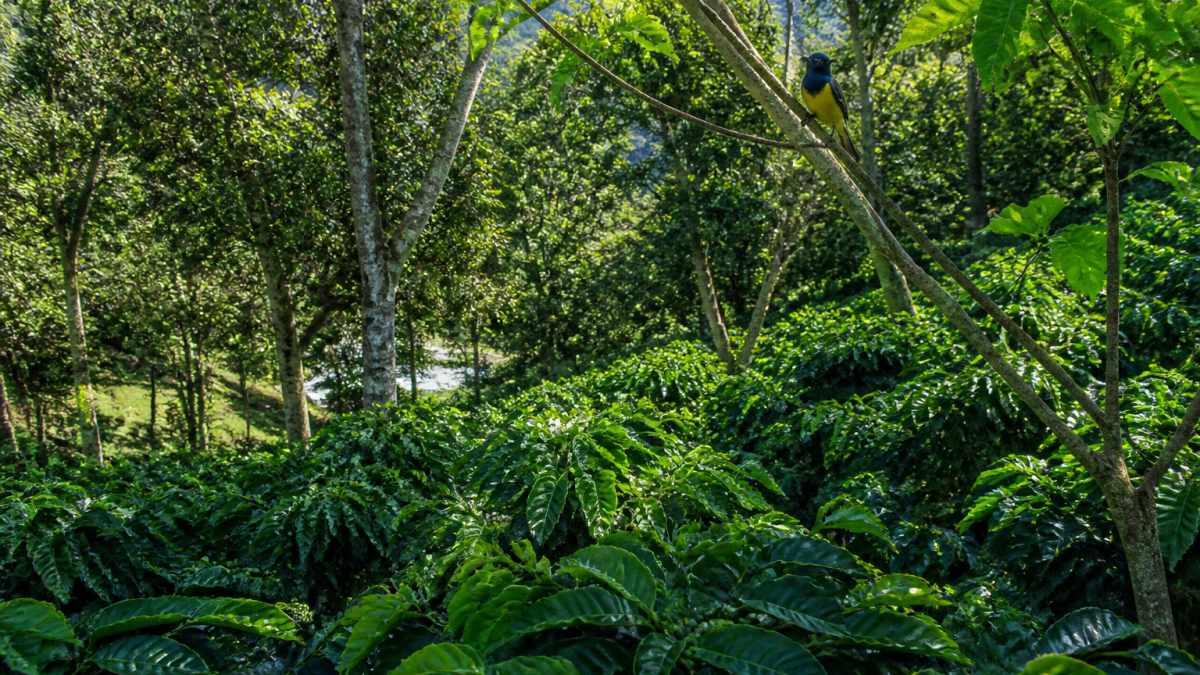
Without synthetic fertilizers, organic coffee farms lean on composting, cover crops, and mulching to feed the soil. That builds organic matter, which holds water and nutrients and reduces erosion on the steep slopes where coffee typically grows. Shade-grown systems, often paired with organic methods, keep a canopy of taller trees over the coffee plants. That canopy does real work: it moderates temperature, supports pollinators, and provides habitat for migratory birds and other wildlife. The Smithsonian Migratory Bird Center's shade coffee research documents how shade systems support bird populations. Fewer synthetic inputs also mean less chemical runoff reaching nearby waterways.
Beyond the Farm: The Trade-Offs Most Articles Skip
Here's the part competitors leave out. A certified-organic label says nothing about the rest of the supply chain, and several of those stages can outweigh the farm-level gains:
- Processing. Washed processing uses large volumes of water; natural (dry) processing uses far less but takes more land and time. Neither is automatically "greener," and the organic standard doesn't pick a winner.
- Transport. Coffee is grown near the equator and drunk everywhere else. Ocean freight is comparatively efficient per pound, but air-freighted "fresh crop" lots carry a much heavier footprint. Origin and shipping method matter as much as certification.
- Packaging. A one-way valve bag is standard for freshness, but whether it's recyclable, compostable, or neither varies widely. Buying whole bean in a larger bag and grinding at home cuts packaging per cup.
- Labor. Organic certification does not address wages or working conditions. If fair labor matters to you, look for a separate third-party social certification alongside the organic seal, the two are not the same thing.
How to Read a Sustainability Claim Without Getting Fooled
Treat every claim as one piece of a bigger picture. Organic certification is a verified, meaningful standard for how the crop was grown, it is not a total sustainability score. A genuinely lower-impact bag tends to stack several signals: organic certification, a stated origin, a roast date, minimal or recyclable packaging, and, where available, a social or shade certification. When a bag only shouts "organic" and says nothing else, you're getting one data point, not the whole story.
Frequently Asked Questions
Is it worth buying organic coffee beans?
It depends on what you value. Organic coffee beans typically cost more than conventional, but the premium goes toward farming practices that avoid synthetic pesticides and support soil health. If you drink coffee daily and want to reduce exposure to chemical residue, organic is a reasonable choice. Deep Blue Coffee Roasters offers USDA Organic options at $22 per 12 oz bag, with $1 off per bag on subscriptions or orders of 3 or more.
Does organic coffee mean pesticide-free?
Not entirely. USDA Organic certification prohibits synthetic pesticides and fertilizers, but organic farms can still use approved natural substances. The key difference is that organic coffee is grown without the synthetic chemicals common in conventional farming. Residue levels in conventional coffee are generally low after roasting, but choosing certified organic coffee reduces your exposure to synthetic pesticides and herbicides.
Do organic coffee beans taste different from conventional beans?
The farming method itself does not determine flavor. What matters more is origin, roast level, and freshness. Organic beans from a specific region, like Ethiopia, can carry distinct notes of apricot, lime, or black tea depending on how they are processed and roasted. A light roast preserves delicate flavors that darker roasting would mask. Look for a roast date and buy from roasters who ship soon after roasting.
How can you tell if coffee beans are truly organic?
Look for the USDA Organic seal on the packaging. This seal means the coffee meets federal standards for organic production, including no synthetic pesticides or fertilizers. Also check for a roast date and origin information. If a bag claims organic but lacks the USDA seal, treat the claim with skepticism. Reputable roasters list certification details and sourcing information clearly.